Biggest Keychron K8 Max Buying Mistakes (And How to Avoid Them)
Introduction
The Keychron K8 Max has become a frequently discussed option among tenkeyless mechanical keyboards, especially for users who balance productivity, gaming, and customization. Its headline features—wired and wireless modes, hot-swappable sockets, and a compact TKL footprint—appeal to a broad audience. Yet many buyers make avoidable mistakes during the purchasing process that lead to compatibility headaches, disappointment with typing feel, or unnecessary additional costs. This article examines the most common Keychron K8 Max buying errors, analyzes the product’s strengths and limitations, and provides a practical buying guide so buyers choose the right configuration for their needs.
Product analysis: Keychron K8 Max — what it is and what it aims to solve
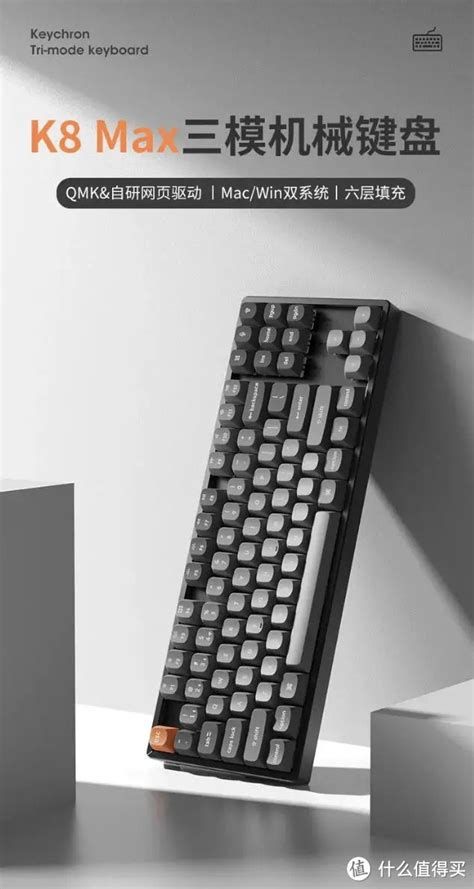
The K8 Max is positioned as an advanced, customizable tenkeyless (87-key) mechanical keyboard aimed at power users who want wireless convenience without sacrificing the flexibility of a customizable mechanical platform. It is notable for combining mainstream conveniences—Bluetooth multi-hosting and USB-C wired connectivity—with moddability features such as hot-swappable switch sockets and support for remapping tools. The vendor offers different switch and keycap options, and the board typically targets ergonomics and acoustic tuning options important to typists and streamers alike.
Design and build quality
Physically, the K8 Max follows a TKL form factor favored by users who want more desk real estate and portability than a full-size keyboard offers. Build options may include aluminum top-plate variants or reinforced plastic cases depending on chosen SKU. The board’s profile, weight, and bevels influence both desk presence and typing comfort; buyers who prioritize a premium heft or specific aesthetic should confirm the exact case material for the configuration being purchased.
Mounting and acoustics
Acoustic signature and typing feel depend heavily on the mounting style, plate material, and factory stabilizer setup. Many users buy a keyboard expecting a polished, gasket-like feel and then find the stock configuration either too rigid or too hollow. The K8 Max’s design choices affect sound dampening and flex—two characteristics that enthusiasts frequently mod to achieve a preferred “thock” or crispness.
Switches, keycaps, and hot-swap flexibility
Hot-swap sockets are a major selling point: they allow switches to be replaced without soldering. However, not all switches are created equal—three-pin vs five-pin, north-facing vs south-facing housings, and stem orientation can affect compatibility. Keycap profile (OEM, Cherry, SA, DSA, etc.) and material (ABS vs PBT) also change the feel and longevity of the keyboard substantially.
Connectivity and battery life
Dual-mode desks—Bluetooth and wired—are ideal for users who switch between laptop and desktop. Bluetooth convenience comes at the typical cost of slightly higher latency and the need for battery management. Battery life expectations vary depending on RGB usage, polling rate, and whether the keyboard remains in constant Bluetooth mode. Buyers who plan heavy wireless use should examine vendor specifications and real-world reports about endurance under preferred settings.
Software, firmware and remapping
Programmatic remapping, macros, and RGB customization are often important to power users. The degree of firmware support (e.g., vendor tooling versus QMK/VIA compatibility) determines how deep customization can go. Enthusiasts who expect full open-source configurability should validate firmware support for the K8 Max variant they plan to buy.
Common buying mistakes and how to avoid them
Mistake 1: Assuming “hot-swap” means universal switch compatibility
Many buyers assume hot-swappable sockets accept any mechanical switch. In practice, some sockets are optimized for three-pin switches and can be unreliable with five-pin switches unless the five pins are clipped. Others place sockets in a way that prevents certain south-facing or north-facing stabilized switches from aligning perfectly.
How to avoid it: Confirm the socket type (3-pin, 5-pin, or universal) before purchase. If five-pin switches are preferred, choose a K8 Max variant advertised as 5-pin compatible or plan to clip the extra pins. Check community reports about switch compatibility for the K8 Max, and consider which switch orientations work with the stabilizers on this board.
Mistake 2: Overlooking layout differences (ANSI vs ISO, Mac vs Windows legends)
International buyers often overlook the difference between ANSI and ISO layouts or between Mac-labeled and Windows-labeled keycaps. A TKL layout can have differently sized Enter or left Shift keys depending on regional standards. Similarly, a Keychron board marketed with Mac legends might include a different bottom-row layout or additional Mac-specific legends that complicate replacement keycap sets.
How to avoid it: Verify the exact layout (ANSI vs ISO) listed in the product description. If using a Mac, confirm whether the vendor ships Mac legend keycaps or a Mac-compatible bottom row. For users planning to use third-party keycaps, cross-check the bottom-row key sizes before committing.
Mistake 3: Expecting out-of-box perfection for stabilizers and sound
Factory stabilizers are often serviceable but may not match the tuned experience of a lubricated and clipped setup. Buyers expecting a silent, wobble-free stabilized Enter or spacebar may be disappointed.
Shop the latest Laptops & Computers picks on Amazon.
Shop Amazon →How to avoid it: Treat the K8 Max as a mod-friendly platform. Budget a small amount of time and supplies (lubricant, optional stabilizer clips) to tune the stabilizers. If immediate premium feel is required, look for vendor bundles with pre-lubed, upgraded stabilizers or third-party builds noted for meticulous quality control.
Mistake 4: Ignoring mounting style and plate material when choosing typing feel
Different mounting schemes (tray mount, gasket mount, top mount) and plate materials (aluminum, brass, polycarbonate) drastically change flex, reverberation, and typing force feedback. A buyer who wants a soft gasket-like feel but chooses a rigid aluminum plate variant will get a different result than expected.
How to avoid it: Decide whether a softer, more damped typing experience or a firmer, more direct feel is preferred. Look for exactly which plate material and mounting style the K8 Max SKU offers. If the vendor lists multiple case/plate options, compare which option aligns with the targeted acoustic profile.
Mistake 5: Not considering Bluetooth limitations for competitive gaming
While Bluetooth is excellent for casual play and productivity, serious competitive gamers often prefer a wired connection for the lowest latency and most reliable polling rates. Expecting wireless performance identical to wired can lead to frustration, especially in low-latency shooter titles.
How to avoid it: For competitive gaming, plan to use USB-C wired mode or verify whether the K8 Max offers a performance-oriented wired polling rate. Save Bluetooth mode for mobility, multi-device switching, or casual gaming sessions.
Mistake 6: Assuming RGB and battery life harmonize without trade-offs
Full RGB lighting modes can significantly reduce Bluetooth battery life. Buyers who want intensive lighting effects without frequent recharges might be surprised by real-world battery drain.
How to avoid it: Understand battery life is conditional on brightness, animation complexity, and wireless connectivity. If long wireless sessions are a priority, opt for simpler lighting profiles or wired use, and check user tests or reviews for battery endurance under representative settings.
Mistake 7: Skipping firmware and software verification
Not all configurations support the same level of remapping or macro programming. Buyers expecting advanced remap via QMK or VIA without verifying support may find vendor software limiting.
How to avoid it: Research the K8 Max firmware compatibility for the SKU being considered. If deep programmability is essential, target a variant explicitly advertised as QMK/VIA compatible or supported by an open firmware community.
Pros & Cons
- Pros
- Compact TKL layout balances desk space and key availability for productivity
- Hot-swap sockets enable quick switch experimentation without soldering
- Dual-mode connectivity supports multi-device workflows (wireless and wired)
- Customizability: many users can tune acoustics, switches, and lighting to preference
- Broad appeal: suitable for typists, developers, streamers, and casual gamers
- Cons
- Out-of-box acoustics and stabilizers may require tuning for premium feel
- Bluetooth mode presents latency and battery trade-offs for competitive gamers
- Switch and keycap compatibility nuances can trip up buyers who assume universal fit
- Firmware and remapping support varies by SKU—advanced customization may need community mods
Comparison table (Keychron K8 Max vs related options)
| Model / Characteristic | Customization level | Mounting/Acoustic focus | Connectivity | Best for |
|---|---|---|---|---|
| Keychron K8 Max | High (hot-swap, switch options, some firmware support) | Balanced—aimed at mod-friendly acoustics with several case/plate options | Bluetooth + USB-C wired | Users who want a customizable TKL for mixed typing/gaming and wireless use |
| Keychron K8 (Standard) | Medium (entry hot-swap options on some SKUs) | Conventional—factory-tuned for out-of-box use | Bluetooth + wired | Buyers seeking a reliable, budget-friendly TKL without heavy modding |
| Keychron K8 Pro / Enthusiast variants | Very High (often gasket or exotic mounts, broader firmware support) | Designed for premium acoustic tuning and typing refinement | Wired preferred for lowest latency; wireless options vary | Typists and hobbyists pursuing a high-end, tunable typing experience |
Buying guide: What buyers should check before purchasing a K8 Max
1. Confirm the exact SKU and what it includes
Keychron often sells multiple SKUs for a single model name, with differences in case material, pre-installed switches, keycap material, and firmware. Buyers should inspect the SKU details to confirm whether the board includes the desired switches (or is barebones), PBT or ABS keycaps, and the manufacturer’s stated firmware support. The model name alone may be insufficient.
2. Decide on layout and legend preferences
Confirm ANSI vs ISO and Mac vs Windows legends. If the buyer uses special languages or needs a particular bottom-row size for aftermarket keycap compatibility, verify the exact key sizes before ordering.
Looking for the best Laptops & Computers deals on Amazon?
Shop Amazon →3. Check hot-swap socket specifics and switch compatibility
Ensure the sockets support the switch pins intended for use. If five-pin switches are preferred but the SKU uses 3-pin sockets, plan to clip pins or select a variant that advertises 5-pin compatibility. Verify any notes about north- or south-facing switch constraints if the buyer plans to use certain switch housings or stabilizers.
4. Evaluate firmware and remapping options
For heavy remappers, confirm whether the K8 Max variant supports QMK/VIA or whether remapping is limited to vendor software. Community support and available firmware docs are important for advanced customizations like per-key macros or layer-based workflows.
5. Understand plate and case materials for desired typing feel
Choose a plate material and mounting style that align with the desired acoustic signature. Polycarbonate or FR4 plates generally provide a softer sound, while aluminum or brass plates provide a crisper, firmer feedback. The mounting style (gasket vs tray) will influence the board’s perceived flex.
6. Evaluate Bluetooth behavior for intended use
If working across multiple devices, test or find user reports on how well Bluetooth device switching functions, how many simultaneous pairings are supported, and how consistent the connection is with the operating systems in use. For latency-sensitive workflows, prioritize wired operation.
7. Factor in modding and upgrade costs
Many K8 Max buyers plan to mod their boards with lube, dampening foam, or upgraded stabilizers. Budget these additional costs and time. For buyers who want plug-and-play perfection, seek vendor bundles with pre-lubed stabilizers or professionally tuned factory builds.
8. Check return, warranty, and community support
Verify the vendor’s return policy and warranty terms, especially for international purchases. Active community resources—forums, Discord servers, and user reviews—are helpful when troubleshooting rare compatibility issues or finding recommended mod parts.
9. Try to hear or test before committing
Where possible, audition the keyboard or a comparable model in person. Sound and tactile feedback are subjective; first-hand testing at a local retailer or user meetup can prevent buyer’s remorse.
Real-world use cases: who benefits most from the K8 Max
The K8 Max suits a variety of buyer profiles when chosen and configured correctly. Developers and writers often appreciate the TKL layout that keeps arrow keys accessible while saving desk space. Content creators and streamers value a keyboard with a solid typing sound after minimal tuning, especially for on-camera setups. Casual and some competitive gamers benefit from the dual-mode connectivity and hot-swap ability to test low-actuation switches for faster input. Hybrid workers who switch between a laptop and desktop find Bluetooth multi-hosting convenient—provided that battery and latency trade-offs are understood.
Final recommendations
The Keychron K8 Max is a versatile, mod-friendly tenkeyless keyboard that can satisfy a broad range of users—from programmers who want a responsive typing surface to hobbyists who enjoy swapping switches and tuning acoustics. The most common purchasing regrets stem from assumptions—about switch compatibility, layout, out-of-box acoustics, and wireless performance—rather than inherent flaws in the product. By confirming the SKU specifics, clarifying layout and firmware support, and budgeting modestly for tuning, buyers can avoid the typical mistakes and form a much more satisfactory ownership experience.
In short: approach the K8 Max as a customizable platform rather than a finished audio/feel product. That mindset, paired with the checklist above, reduces the risk of misaligned expectations and makes it easier to build a keyboard that fits the user’s workflow and aesthetic preferences.